


These precision-machined energy storage brackets deliver mounting solutions for industrial battery systems. Produced with 5-axis CNC technology in an ISO-certified manufacturing facility, each bracket supports precise assembly alignment with tight dimensional tolerances. Backed by 22 years of metal fabrication expertise, the brackets maintain structural integrity after 1500+ hours of vibration testing. The components serve as mounting support for ESS components, targeting renewable energy system integrators and industrial clients.
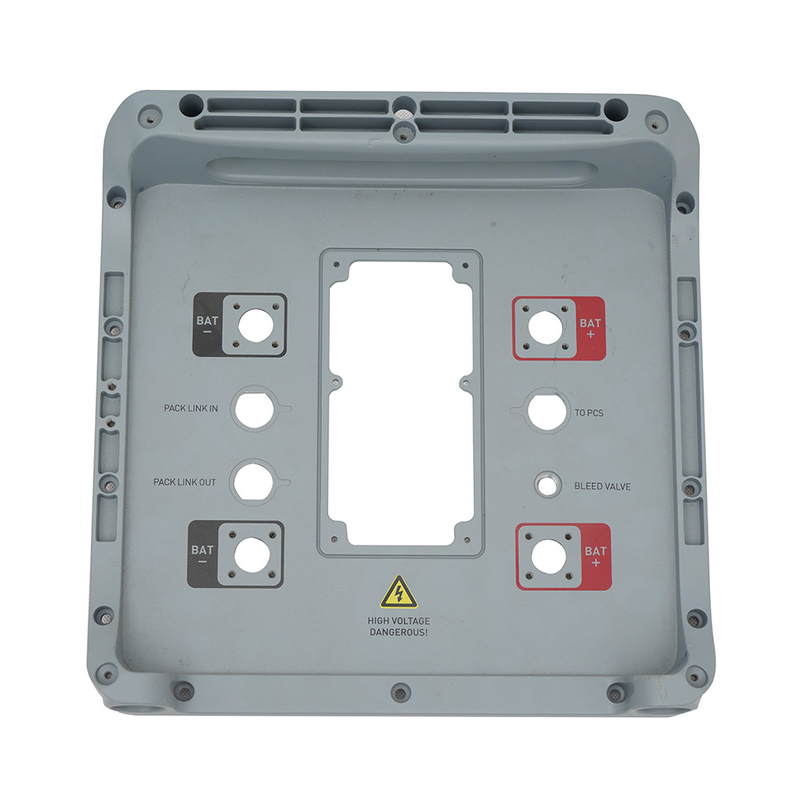
The manufacturing process of these battery energy storage brackets relies on 5-axis CNC machining technology, operated in a facility with ISO certification. The machining process enables consistent dimensional control across each unit, supporting accurate fit during on-site assembly. With 22 years of accumulated metal fabrication experience, the production team implements standardized quality checks throughout the manufacturing workflow to verify dimensional accuracy and structural performance. The production facility houses multiple 5-axis CNC machines, supporting both small-batch prototype production and large-volume bulk orders for energy storage projects.
Each bracket undergoes vibration testing for over 1500 hours to verify structural performance under continuous mechanical stress. The testing process validates that the brackets maintain structural integrity in operating environments with regular vibration, reducing the risk of loosening or displacement during long-term use. This design helps mitigate the impact of vibration and environmental stressors on connected energy storage units, supporting consistent operation of the overall system.
The machining process also supports the production of brackets with complex geometries, adapting to varied mounting structures in different energy storage system designs. Each production batch undergoes dimensional inspection to verify that tolerance levels meet stated specifications, ensuring consistency across all units in an order. All production steps follow standardized operating procedures to support stable output across batch orders, meeting the volume requirements of enterprise customers and commercial procurement projects.
The brackets are available in three base materials, allowing selection based on specific project requirements and operating environments. Aluminum serves as a lightweight option, suitable for projects that prioritize weight reduction while maintaining basic structural support. Stainless steel offers higher resistance to moisture and corrosion, adapting to outdoor or humid operating conditions. Titanium provides enhanced structural strength and corrosion resistance, designed for extreme or harsh operating environments. Each material option undergoes corresponding surface treatment testing to verify performance under target environmental conditions.
Three surface finish options are available to match material selection and application needs. Anodized finish improves surface hardness and corrosion resistance for aluminum brackets. Powder coated finish adds a protective layer with customizable color options, suitable for outdoor installations. Electro polished finish delivers a smooth, clean surface with enhanced corrosion resistance, fitting for stainless steel brackets used in high-humidity or sanitary operating environments.
Feature | Description |
Material Options | Aluminum, Stainless Steel, Titanium |
Tolerance | ±0.002mm |
Surface Finish | Anodized, Powder Coated, Electro Polished |
Load Capacity | Up to 200kg per bracket |
Design Customization | Available in various shapes and sizes |
Custom adjustments to dimensions and structures are available based on project-specific requirements, with specifications aligned to customer-provided design drawings.
These CNC machined brackets are widely used in renewable energy systems, including solar power plants and wind energy storage installations. In solar energy storage projects, the brackets provide fixed mounting support for battery packs and inverters, adapting to the layout of ground-mounted or rooftop solar-plus-storage systems. For wind energy storage facilities, the vibration-resistant structure of the brackets adapts to the operating environment of wind farms, maintaining stable positioning of energy storage units.
The brackets also fit other green energy solutions that require fixed mounting for energy storage components. The material and surface finish options allow the brackets to adapt to outdoor weather conditions, including temperature variations and moisture exposure, supporting long-term operation in renewable energy projects.
For industrial energy systems such as power plants and commercial energy storage stations, these brackets provide stable mounting solutions for battery units and related energy storage devices. The load capacity of each bracket supports the weight of standard industrial energy storage modules, adapting to large-scale energy storage system layouts. For large-scale energy storage stations with hundreds of battery modules, the consistent dimensional accuracy of the brackets supports uniform assembly across the entire system, simplifying later maintenance and component replacement.
In industrial applications, the tight tolerance of the brackets supports modular assembly of energy storage systems, reducing on-site installation time and alignment errors. This feature helps improve the efficiency of system integration and construction, supporting the project schedule of commercial procurement projects.
The bracket can be manufactured from multiple materials, including aluminum, stainless steel, and titanium. Material selection is determined by specific project needs and the operating environment of the installation site.
Each bracket supports a load of up to 200kg, providing mounting support for common energy storage units and related components.
Custom design services are available for these energy storage brackets, supporting adjustments to shape, size and structure based on the specific design of customers’ energy storage systems. The production team works with enterprise customers to align product specifications with project requirements, adapting to varied system integration needs across different application scenarios.


