


CNC machining has become one of the most reliable and precise methods in modern manufacturing. It allows engineers, product designers, and buyers to produce parts with exceptional accuracy and repeatability. As a leading manufacturer in metal parts production, XIN SHANG METAL provides comprehensive CNC machining services that combine technology and craftsmanship. Understanding CNC machining helps customers decide when it is the right process for their project—whether for prototypes, mass production, or custom components.
CNC machining, or Computer Numerical Control machining, is a precision manufacturing process that removes material from a solid block to form the desired shape. Unlike additive processes such as 3D printing, CNC machining is subtractive—it cuts away material to achieve final dimensions with high accuracy.
At its core, CNC machining uses digital design files (CAD) that are converted into machine-readable codes known as G-code. This code controls the movement of the cutting tools, guiding them along precise paths defined by the designer. The process is automated and repeatable, ensuring every part matches the intended specifications. The combination of digital accuracy and mechanical precision makes CNC machining ideal for producing parts that require tight tolerances, consistent finishes, and complex geometries.
CNC technology has revolutionized the way manufacturers approach custom component production. Since the process relies on computer-generated tool paths, it eliminates most of the variability associated with manual machining. This level of consistency is crucial for industries such as aerospace and medical devices, where even minor dimensional deviations can lead to performance failures. The digital workflow also allows for easy program updates, making design adjustments or repeat orders more efficient.
There are several types of CNC machines, each designed for specific applications. CNC mills use rotating cutters to remove material and can move along three, four, or five axes to create intricate shapes. CNC lathes rotate the workpiece against a cutting tool and are ideal for cylindrical parts like shafts and bushings. CNC routers work well for large panels and lightweight materials, while multi-axis machining centers can handle the most complex geometries with minimal setups.
At XIN SHANG METAL, our advanced CNC equipment includes high-speed mills and precision lathes capable of 4-axis and 5-axis operations, allowing us to meet the demanding needs of automotive, aerospace, and electronics industries. Our skilled engineers program each operation carefully to achieve maximum material efficiency and minimum waste, supporting sustainable production practices that align with modern manufacturing goals.
CNC machining is incredibly versatile when it comes to material selection. This flexibility allows designers and engineers to choose the best material for each application without compromising on precision or surface quality.
Metals such as aluminum, steel, brass, copper, and titanium are frequently used in CNC machining. Aluminum is lightweight, corrosion-resistant, and suitable for components that require thermal conductivity, such as heat sinks and electronic housings. Stainless steel is preferred for its strength and durability, making it ideal for mechanical and structural applications. Titanium offers excellent strength-to-weight ratio and corrosion resistance, often used in aerospace and medical components.
In addition to metals, various plastics like ABS, PEEK, nylon, and acrylic can also be machined. These materials are often chosen for lightweight prototypes, insulation components, or precision parts where metal properties are unnecessary. XIN SHANG METAL provides a full range of metal and plastic machining options, ensuring material consistency and performance according to customer requirements.
Precision is a key advantage of CNC machining. Tolerances as tight as ±0.005 mm can be achieved, depending on the part geometry and material. Surface finishes can also be customized—from rough machined surfaces for internal components to polished or anodized finishes for visible parts. The smoother the finish, the better the part performs in terms of wear resistance, sealing, and aesthetics.
For customers seeking high-end components, XIN SHANG METAL offers multiple post-processing options including polishing, sandblasting, anodizing, and electroplating to enhance both function and appearance. We also conduct surface roughness testing to ensure every finished part meets the required visual and functional standards.
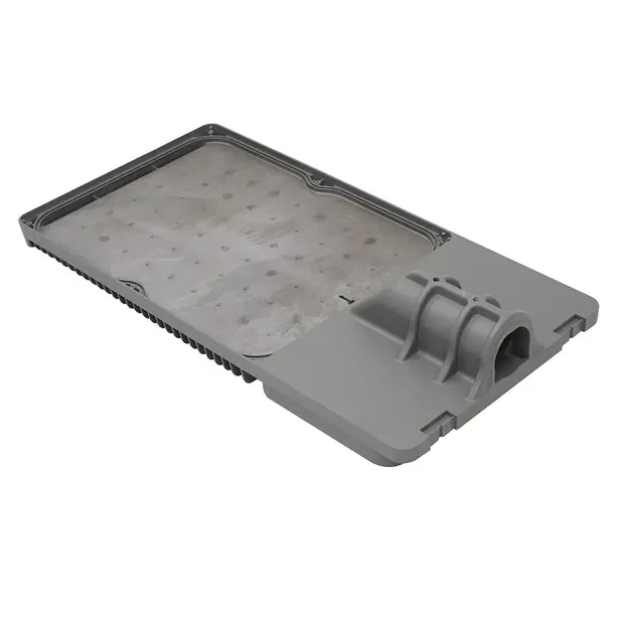
Different CNC machining processes are suitable for different geometries and performance needs. Understanding which process to choose helps optimize cost, time, and quality.
CNC milling is best suited for parts with complex shapes, pockets, or slots. The rotating cutting tool moves along multiple axes to remove material, creating precise 3D shapes. This process is ideal for items like engine housings, brackets, and custom enclosures.
CNC turning, on the other hand, involves rotating the workpiece while a stationary cutting tool removes material. This process excels at producing round or tubular parts such as bushings, rods, or threaded shafts. It provides excellent dimensional accuracy and smooth finishes on cylindrical surfaces.
At XIN SHANG METAL, we use both milling and turning techniques depending on the design complexity and production volume. For example, our CNC lathes are often used for automotive components requiring concentric accuracy, while our milling machines are applied to intricate assemblies used in LED optoelectronic products.
When part designs involve undercuts, angled surfaces, or tight contours, multi-axis CNC machining is the solution. 4-axis and 5-axis machines allow cutting tools to approach the part from different directions without repositioning it manually. This reduces setup time, improves accuracy, and eliminates alignment errors.
Complex parts that once required multiple fixtures can now be machined in a single operation. XIN SHANG METAL’s multi-axis capabilities ensure high efficiency and exceptional precision for demanding projects such as aerospace brackets or energy system components. Additionally, our experienced operators perform in-process inspections to verify dimensions during production, reducing errors and ensuring consistency throughout each batch.
CNC machining offers many benefits, but it is also important to understand its limitations so that customers can choose it wisely.
One of the main advantages of CNC machining is its ability to produce parts with consistent accuracy over large production runs. Once a program is set, every piece will match the digital design precisely. This repeatability is critical in sectors like automotive and electronics, where dimensional consistency affects product performance.
CNC machining also excels in material flexibility and complex geometry creation. It can handle both metals and plastics, deliver smooth surface finishes, and produce parts with intricate internal features. The process is scalable—from single prototypes to mass production—and allows tight quality control through automated monitoring systems. XIN SHANG METAL combines these benefits with strict inspection protocols, ensuring every component meets international standards.
For very simple parts or extremely low-volume production, CNC machining may be more expensive compared to manual machining or casting. The programming and setup require skilled technicians, and each toolpath must be optimized for efficiency. Additionally, not every design is suitable for CNC machining—sharp internal corners or deep narrow cavities can be difficult to produce. Designers should follow design-for-manufacture (DFM) guidelines to achieve optimal performance and cost balance. XIN SHANG METAL offers technical support to assist clients in refining their designs for machining feasibility and better cost efficiency.
Choosing a reliable CNC manufacturer involves more than just comparing prices. A professional supplier ensures precision, consistency, and transparent communication from the initial quote to final delivery.
Before production begins, it’s important to confirm that the manufacturer maintains robust quality assurance systems. This includes material traceability, dimensional inspection, and sample verification. Tolerance reports, inspection certificates, and performance testing should be available upon request. At XIN SHANG METAL, our in-house quality inspection team uses coordinate measuring machines (CMM), digital calipers, and surface testers to validate each part. We strictly adhere to ISO-compliant quality management systems to guarantee product consistency and reliability.
With more than 150 experienced employees and advanced CNC machines, XIN SHANG METAL provides a full suite of machining solutions for industries such as automotive, electronics, and renewable energy. Our services cover material sourcing, precision machining, surface finishing, and assembly. From prototype to final production, we work closely with clients to ensure each part meets exact requirements. Our fast quoting process and efficient production line enable short lead times without compromising quality.
Furthermore, our engineering team can support product optimization, helping clients identify the best machining approach for improved durability and cost savings. Whether you require a small batch of custom prototypes or large-scale industrial production, we offer scalable, reliable, and cost-effective machining solutions tailored to your project needs.
CNC machining remains a cornerstone of precision manufacturing, enabling the production of durable, complex, and high-performance components across multiple industries. Whether you need prototypes, structural parts, or high-volume production, XIN SHANG METAL delivers dependable CNC machining solutions that meet strict standards for accuracy and finish. To learn more about our capabilities or to request a quote, please contact us today and discover how our expertise in precision machining can bring your design to life.


