Views: 0 Author: Site Editor Publish Time: 2025-10-23 Origin: Site


When exploring modern manufacturing solutions, one acronym consistently appears: CNC machining. At its core, CNC stands for Computer Numerical Control, a technology that has revolutionized precision manufacturing and allows companies like XIN SHANG METAL to produce intricate parts with unmatched accuracy. Understanding what CNC stands for isn’t just a matter of terminology—it’s essential for designers, engineers, and buyers who rely on precise, repeatable components in industries ranging from automotive to electronics. By understanding CNC, clients can make better-informed decisions about material selection, design feasibility, and production timelines. This article explains CNC’s meaning, history, practical applications, and why it remains critical in today’s manufacturing landscape.
CNC, or Computer Numerical Control, refers to the automated control of machining tools using a computer. Instead of relying solely on manual operation, CNC systems follow coded instructions, often referred to as G-code, to precisely guide machinery. This allows for consistent production of complex shapes, tight tolerances, and high-quality finishes. For manufacturers like XIN SHANG METAL, CNC machining ensures that each component meets exact specifications, from automotive brackets to electronic housings and intricate aluminum alloy parts.
The "numerical control" aspect emphasizes that every movement of the machine—whether a spindle rotation, tool path, or feed rate—is defined numerically, enabling repeatable and measurable accuracy. The “computer” component represents the intelligence behind executing these instructions efficiently and error-free. This combination transforms raw materials into complex, high-precision products with minimal human intervention, providing both speed and reliability. Furthermore, CNC machining allows for complex internal geometries, fine surface textures, and delicate micro-features that would be extremely difficult or impossible to achieve manually.
The development of CNC technology traces back to the mid-20th century. Initially, machines were operated using punched cards and tapes, encoding simple commands for lathes and milling machines. This method reduced human error compared to fully manual machining but was limited in flexibility and speed.
By the 1970s and 1980s, advances in digital computers allowed machines to read software-generated codes, integrating computer-aided manufacturing (CAM) systems with CNC machinery. This evolution enabled more complex part geometries, higher precision, and easier program adjustments. Today, modern CNC machining centers combine multi-axis operations, real-time monitoring, and sophisticated software to achieve levels of detail previously impossible. XIN SHANG METAL leverages these advancements to offer products that meet exacting standards, including precision zinc and aluminum alloy components for electronics, automotive, and LED optoelectronic industries.
The historical progression of CNC also reflects the industry’s shift toward full automation. Machines that once required constant supervision can now run for hours, performing operations like deep-hole drilling, intricate contour milling, and fine engraving with minimal human intervention. This evolution not only improves efficiency but also expands the range of feasible designs for engineers and product developers.
One of the greatest advantages of CNC machining lies in its ability to maintain consistent tolerances. In manual machining, part quality relies heavily on the operator’s skill, experience, and attentiveness. Even minor deviations in hand movements can lead to dimensional errors or surface imperfections.
With CNC, the machine executes pre-programmed instructions with micron-level precision, eliminating variability due to human factors. XIN SHANG METAL utilizes CNC technology to guarantee that every product, from high-end nameplates to oven components, maintains uniform quality across large production runs. This repeatability ensures that replacement parts fit perfectly, assemblies function correctly, and product performance remains reliable. Additionally, CNC machining allows for tighter tolerances than manual methods, which is especially important in industries like aerospace, medical devices, and automotive safety components.
Central to CNC machining is the use of G-code, a language that directs machines how to move tools along precise paths. CAM software converts 3D CAD models into G-code, calculating optimal tool paths, cutting speeds, and feed rates. This process allows engineers to visualize and optimize production before any physical cutting occurs, reducing waste and improving efficiency.
After machining, post-process verification is crucial. Modern CNC systems often include integrated inspection tools such as probes or vision systems, measuring part dimensions against the design. This ensures that components produced at XIN SHANG METAL meet both design specifications and industry standards, providing clients with confidence in the durability and accuracy of each product. Such verification is particularly valuable for high-value components where failure is not an option, such as precision connectors, automotive gear housings, and LED mounting frames.
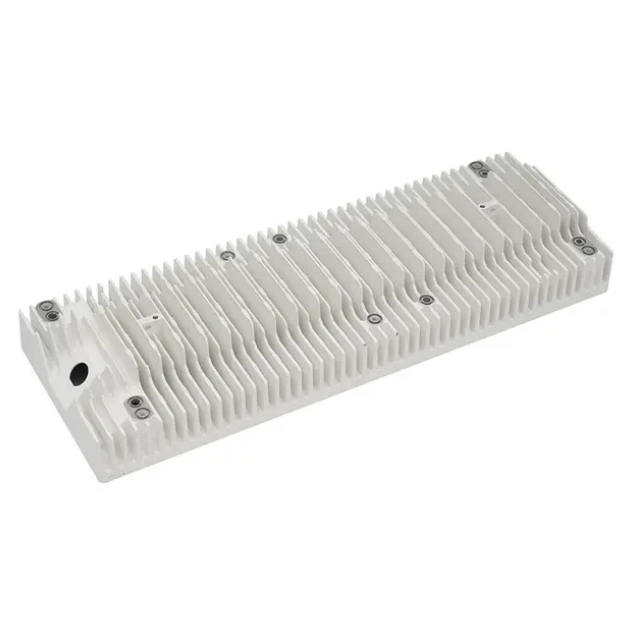
CNC machining encompasses a wide range of systems, each suited for different applications. Basic CNC machines, such as 3-axis routers or lathes, perform linear movements along standard axes and are ideal for simpler components. Advanced systems, including 5-axis machining centers, enable simultaneous movement along multiple planes, allowing for intricate 3D geometries and complex surface finishes.
Understanding these distinctions is crucial for buyers and designers, as the type of CNC equipment directly impacts achievable tolerances, production speed, and the complexity of parts that can be manufactured. At XIN SHANG METAL, our diverse fleet of CNC machinery enables us to handle projects ranging from straightforward aluminum components to highly detailed electronic housings. Our 5-axis machines, for instance, allow for angled drilling, complex milling, and sculpted surfaces without multiple setups, greatly reducing errors and improving surface quality.
Modern CNC machines increasingly incorporate automation features, such as robotic tool changers, automatic feeders, and multi-axis capabilities. These advancements allow for continuous, unattended operation, higher throughput, and enhanced precision.
Integrated inspection systems provide real-time measurements and feedback, ensuring that any deviation is immediately corrected. This reduces scrap rates, minimizes rework, and improves overall efficiency. For clients relying on XIN SHANG METAL for high-quality zinc and aluminum alloy components, these technologies translate into consistent, dependable products that meet strict performance standards. The combination of automation and precise inspection makes it possible to manufacture parts with complex geometries, thin walls, and fine tolerances consistently, which is critical in modern electronics and automotive applications.
The future of CNC machining is closely tied to digitalization and artificial intelligence. Smart toolpaths, optimized using AI algorithms, improve material removal efficiency while extending tool life. Machine monitoring systems track vibrations, temperature, and spindle performance, alerting operators to potential issues before they affect production.
Predictive maintenance leverages collected data to schedule repairs proactively, preventing downtime and ensuring uninterrupted production. By adopting these technologies, XIN SHANG METAL continues to push the boundaries of precision manufacturing, delivering parts that exceed expectations in accuracy and consistency.
Suppliers are increasingly expected to provide end-to-end solutions, integrating design, machining, and inspection. CNC systems are evolving to meet these demands, supporting complex geometries, high-volume production, and specialized materials. At XIN SHANG METAL, our engineers and technicians utilize advanced CNC machines to manufacture electronic components, automotive parts, and high-end optoelectronic products with precision, speed, and reliability. Our ability to combine traditional manufacturing expertise with modern digital technologies ensures that every product meets rigorous specifications and client expectations. Furthermore, continuous training of our technical staff allows our team to stay ahead of industry trends, implement new software solutions, and refine processes for optimal performance across a variety of metal alloys and component types.
Understanding CNC machining is more than knowing what the acronym stands for; it’s about recognizing the technology’s impact on precision, repeatability, and product quality. For buyers, designers, and engineers, knowledge of CNC capabilities enables informed decisions, ensuring that the components they source meet stringent requirements. At XIN SHANG METAL, we leverage state-of-the-art CNC machinery to produce zinc and aluminum alloy parts that satisfy diverse industrial needs. Whether for automotive, electronics, or LED applications, our CNC production delivers reliable, high-quality results with minimal variation. To learn more about our CNC processes, equipment, and the wide range of CNC components we manufacture, please contact us.


